Richard Lightbourn Talks Bahamian Law, the Privy Council and Foreign Investment
By Alexander Britell
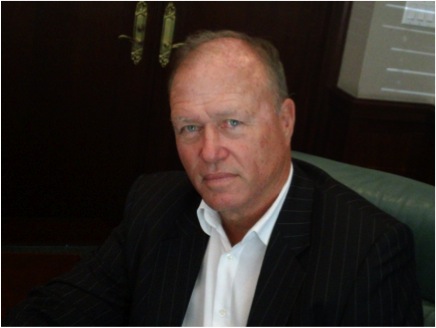
Richard Lightbourn is a partner at McKinney, Bancroft and Hughes, the landmark Nassau law firm. Current Prime Minister Hubert Ingraham was a law clerk at the firm, and his predecessor, Perry Christie, committed his pupilage at the firm. Lightbourn graduated from the London School of Economics and the University of London, and was admitted to Gray’s Inn in 1968 before being admitted to the Bahamas bar in 1969. Lightbourn, who specializes in banking and finance, litigation and foreign and local investment, talked to Caribbean Journal about the development of Bahamian law, the future of the Privy Council and how the Bahamas needs to stimulate development outside of New Providence.
How has the practice of law changed in the Bahamas in the past few decades?
It’s become more sophisticated. In recent years, we have had all of these legislation requirements to comply with all of the financial issues that have arisen as a result of Uncle Sam deciding that the world must be one, and that they must control it. So we’ve had a lot of changes there. But there’s been a lot of new legislation and attempts to produce legislation which would create new financial vehicles, which in some respects are attempts to get around, I suppose, some of the tax issues in other countries. But it seems each step forward is a roadblock a few years down the road when the major powers seem to feel that it’s interfering with their control of their own citizens. So there are all of these sorts of vehicles that just didn’t exist before, so we’ve had a huge amount of legislation introduced in the last 20 years.
How has that affected specialization?
In the days where there wasn’t really a need to focus on a particular area of law – lawyers had pretty general practices. Lawyers did some litigation, some trust work, corporate work. It’s now gotten to the point where you’ve got to specialize because there’s been just so much legislation and lawyers have become a lot more sophisticated in terms of their practice, because it’s a necessity. The courts haven’t gotten to the point where they will have the judges deal with a particular branch of the law — so we’ll have judges doing criminal work and judges doing civil work, and I think that’s been detrimental. You’ve gotten to the point where you can’t expect the judge to have detailed knowledge of all the different aspects of the law, so we really should get to the point where we’re the judges are specializing in areas.
Do you see the Privy Council staying in place as the ultimate court of appeal?
The mood in the Bahamas still seems to be that we would prefer to have a Privy Council remain as the ultimate court of appeal. Whether that is going to be changed or not in that sentiment, I don’t know. It seems the main issue that made the Caribbean Community unhappy with the Privy Council was their approach toward the death penalty, because [the Council] has been very much opposed to it, and they seem to make every effort to prevent [a given] country from exercising the death penalty. So the countries on the whole are not happy with that position. It’s generally felt that imposition of the death penalty will assist in alleviating the crime problem.
What kinds of changes have you seen in legal education?
We have the college here that now has a fair number of Bahamian students that are getting their legal education locally. Still, I think it’s only a fraction of the students, the majority still go to the UK. But I think it’s a good thing to have the local law school here, which is helpful. The legal profession has grown to the point where you wonder whether you want to encourage the number of lawyers to increase the legal profession, with the way it has been increasing over the last 20 years. I think the total is over 1,000 now, and that is a huge increase. I don’t have the details, but it’s also a very, very young bar, certainly young in terms of the years of practice. A lot of older people have also left the teaching profession or other professions to do law in later years – so they’re not all in their young 20s becoming members of the bar. But just a huge influx has made things difficult. It’s very competitive –not that that’s a bad thing—but there’s one concern: when it’s competitive in the way that it is, will standards be affected, or will [attorneys] be more inclined to try and impress clients with the speed with which they do work rather than the quality of their work.
From what you see on the legal side, how do you see investment in the Bahamas? How has the country been getting through the downturn?
The last few years haven been difficult, it’s affected everything. The economy has been affected, and as a consequence, lawyers have been severely impacted, so there’s been a large reduction in the commercial businesses here, in commercial investment in the Bahamas. The second-home buyers are few and far between. In places where you would have families owning property for generations – for instance, a place like Harbour Island, where you have a lot of those homeowners who have owned houses from the 1950s, suddenly they’re selling –whereas, previously, that type of thing wouldn’t happen. But the extent of financial crisis has really impacted the country, and, as a consequence, the legal profession. There were a lot of large projects that were proposed and had just about commenced at the time the crisis really hit, and in many respects it’s fortunate that they weren’t halfway down the development ladder, because it would have just been a total catastrophe to have half-finished buildings all over the place. There are suggestions that there’s been a slight improvement in the last 6 months or so, there’s certainly been some signs of increase investment here.
What are the projects that give those signs?
Of course you have this large development on Cable Beach, the Baha Mar project. There’s also the Albany project [of billionaire Joseph Lewis, in which Tiger Woods is an investor] on the outside of New Providence. The government has to strive to try and get developers to develop outside of Nassau and New Providence. The other islands have so much more to offer in terms of natural beauty, and there’s a real market for people that want to have a more relaxed type of vacation. Certainly the [out] islands offer them the opportunity that you’re not going to get here when we finish [Baha Mar]. Of course, you have [Sol] Kerzner’s Atlantis project, which really was the engine to the development in the early 90s that started here. He set a standard that’s kind of hard to beat, and something that people strive to emulate. And it has really been a great lesson to the Bahamas.