Cruise Arrivals Are Surging in the US Virgin Islands, Led by St. Thomas and St. Croix — And It’s Growing Faster Than Anywhere Else in the Region
It’s no secret that the US Virgin Islands has seen a huge boom in tourist arrivals so far in 2026.
But the destination is also seeing faster cruise growth than anywhere else in the Caribbean, Caribbean Journal has learned.
The USVI reported 831,690 cruise passenger arrivals in the first quarter, according to data provided to CJ by the Caribbean Tourism Organization.
That represented a 68 percent increase in arrivals over the first quarter of last year — a higher growth rate than any other destination — followed by Puerto Rico at 51.6 percent and the nearby British Virgin Islands at 29.3 percent.
The BVI’s cruise traffic is centered on Tortola Pier Park, the cruise and shopping district in Road Town which has helped transform the territory into one of the region’s busiest small-island ports.
In the USVI, the gains reflect the strength of both St. Thomas and St. Croix, two islands offering very different cruise experiences within the same destination.
The Return of St. Thomas
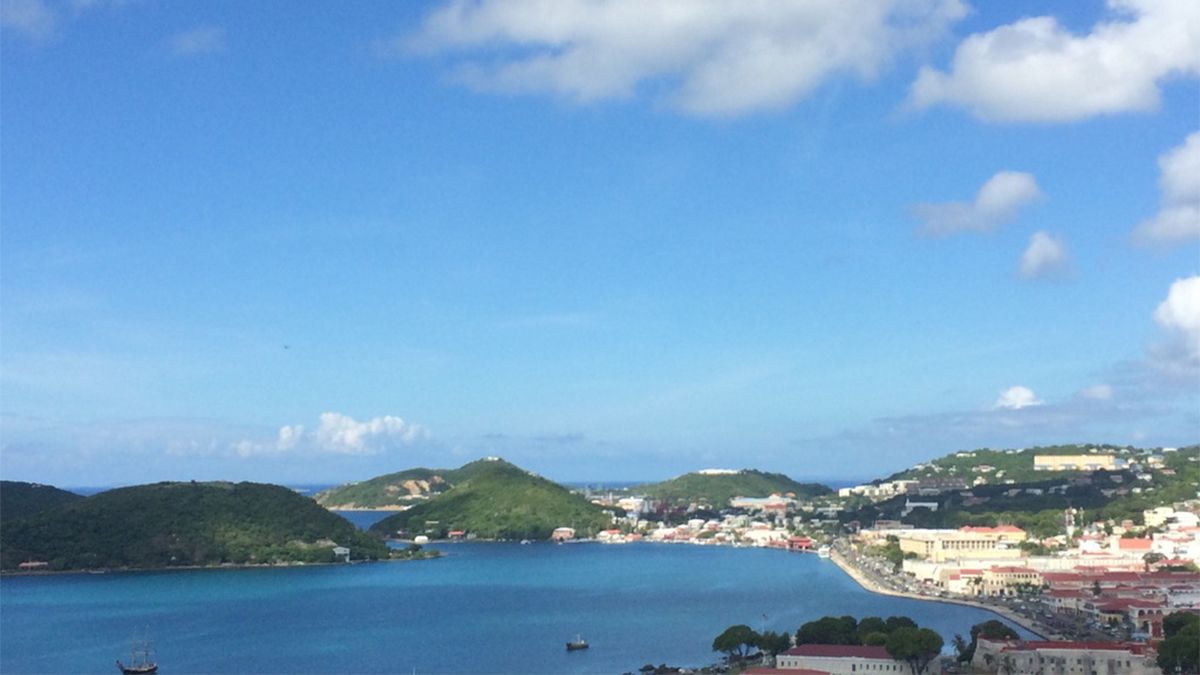
St. Thomas remains the center of cruise tourism in the territory, with ships calling at Havensight’s West Indian Company dock, Crown Bay and the anchorage off Charlotte Amalie.
The island has long been one of the Caribbean’s essential cruise ports, prized for its natural harbor, extensive shopping and proximity to some of the region’s most famous beaches.
Passengers arriving at Havensight can walk directly into one of the Caribbean’s largest cruise shopping districts or continue into Charlotte Amalie, where Danish colonial buildings, historic stairways and narrow streets climb above the harbor.
The island’s beach circuit remains a major part of the appeal. Magens Bay is the best-known stop, with a long arc of calm water and green hills surrounding the sand. Sapphire Beach, Lindquist Beach and Coki Point offer alternatives on the eastern side of the island, while boat trips can take passengers toward neighboring cays or across to St. John.
The ability to deliver shopping, beaches, history and sailing within a short port call has kept St. Thomas near the top of Caribbean cruise itineraries for decades.
The latest numbers suggest the island’s cruise economy isn’t merely recovering. It’s expanding at a rate few regional destinations are matching.
St. Croix Is Growing, Too
The USVI’s cruise story extends beyond St. Thomas.
Ships arriving in St. Croix dock at the pier in Frederiksted, a historic town on the island’s western side known for its pastel buildings, waterfront promenade and beaches within walking distance of the ship.
St. Croix offers a larger and more varied landscape than the territory’s other principal islands. Passengers can explore Christiansted, visit rum distilleries, snorkel at Buck Island, tour former sugar estates or spend the day along the beaches of the west end.
Frederiksted itself has become an increasingly appealing port experience. Restaurants, bars, shops and dive operators are clustered close to the pier, while the water beside town is known for snorkeling and frequent sea turtle sightings.
The island’s inclusion on more itineraries gives cruise lines another USVI option and helps spread visitor spending beyond St. Thomas.
It also makes the territory more versatile. A ship can call at a major shopping and beach port in St. Thomas or offer a more historic, culinary and nature-driven day in St. Croix.
A Cruise Port With Several Islands Within Reach
Geography remains one of the USVI’s greatest strengths.
A call in St. Thomas doesn’t have to remain entirely on St. Thomas. Ferries and excursion boats connect the island with St. John, where two-thirds of the land is protected within Virgin Islands National Park.
Beaches such as Trunk Bay, Cinnamon Bay and Hawksnest Bay give cruise passengers a markedly different experience from Charlotte Amalie’s shopping streets and busy harbor.
Smaller offshore islands also provide opportunities for sailing, snorkeling and beach excursions. The surrounding waters are filled with cays, reefs and protected bays, allowing cruise lines to sell a wide variety of shore experiences from the same port.
The neighboring British Virgin Islands add another dimension to the wider cruising region. Tortola, Jost Van Dyke and Virgin Gorda sit within easy sailing distance, helping make the northern Virgin Islands one of the most concentrated cruise and yachting areas in the Caribbean.
Why the Growth Is Significant
A 68 percent increase represents more than a strong quarter.
Cruise passengers support taxi drivers, tour operators, restaurants, retailers, beach bars, marinas and attractions across the territory. The economic effect extends from the docks in Charlotte Amalie and Frederiksted to beaches, historic districts and excursion sites throughout the islands.
The growth also comes as Caribbean destinations compete intensely for new ships and expanded itineraries.
Cruise lines now have more private destinations, larger vessels and increasingly complex deployment strategies. Ports have to demonstrate they can receive ships efficiently while providing enough experiences to satisfy passengers arriving in groups numbering in the thousands.
The USVI has several advantages in that competition. It’s part of the United States, uses the US dollar and has extensive experience serving the cruise industry. St. Thomas can accommodate multiple ships while offering a wide variety of excursions within a relatively compact area.
The territory also benefits from its place on eastern Caribbean itineraries. It can be paired naturally with Puerto Rico, the British Virgin Islands, St. Maarten, Antigua and other nearby ports.
More Than a Recovery Story
Caribbean cruise traffic has rebounded strongly across much of the region, but the USVI’s first-quarter performance stands apart.
Puerto Rico’s 51.6 percent increase reflects the growing strength of San Juan as both a port of call and a homeport. The British Virgin Islands’ 29.3 percent growth demonstrates Tortola’s continued emergence as a major cruise stop.
The USVI, however, grew even faster than both.
The territory’s 831,690 first-quarter cruise passengers placed it among the Caribbean’s busiest destinations while the 68 percent increase made it the fastest-growing.
The result mirrors the wider tourism surge taking place across the islands in 2026. More travelers are arriving by air, more ships are entering the territory’s harbors and more visitors are exploring beyond the traditional centers of Charlotte Amalie and Magens Bay.
The next challenge will be maintaining the quality of the visitor experience as the numbers rise.
St. Thomas has to balance large passenger volumes with the character of its beaches, historic streets and neighborhoods. St. Croix has an opportunity to grow its cruise sector while preserving the slower, more independent personality which distinguishes it from many competing ports.
The early 2026 figures indicate cruise lines and passengers are responding to what the territory offers: several distinct islands, one of the Caribbean’s great natural harbors and a remarkably broad range of experiences within a small geographic area.
Right now, no Caribbean cruise destination is growing faster.