The Collapse of Air Antilles and the Future of Caribbean Regional Aviation

The court-ordered liquidation of Air Antilles, announced on April 27, 2026 by the Commercial Court of Pointe-à-Pitre, goes far beyond the collapse of a single airline. It once again highlights the structural fragilities of air transport in the Caribbean.
In a region where connectivity is a vital issue, the disappearance of the carrier raises a central question: is there truly a viable economic model for inter-island air transport?
Air Antilles: The End of a Regional Ambition
After several months of uncertainty, Air Antilles permanently ceased operations despite a restructuring attempt launched in February 2026, itself following insolvency proceedings initiated in 2023.
Its disappearance is particularly significant because it was tied to a strong regional development ambition, notably supported by the Collectivity of Saint-Martin. Public authorities had backed the airline as part of a broader strategy to reduce regional isolation, investing tens of millions of euros to support the company.
The objective was clear: to ensure long-term territorial continuity and maintain regular air links between Caribbean islands.
But this ambition collided with a particularly challenging operational and financial reality.
After losing its Air Operator Certificate at the end of 2025, the airline’s operations were abruptly interrupted. A partial and fragile restart never succeeded in restoring a sufficient level of activity, leaving employees and passengers in prolonged uncertainty.
The failure of the recovery effort, despite a structured industrial project, confirms that Air Antilles’ difficulties were not simply the result of management decisions, but reflected a much deeper economic imbalance.
A Regional Model Under Constant Pressure
Caribbean aviation faces several structural constraints simultaneously: low passenger volumes, strong seasonality, dependence on fuel costs, and high taxation.
One example illustrates the situation clearly: on certain inter-island routes, a significant share of the ticket price — often more than 30 percent — is absorbed by taxes and airport fees. This pricing structure mechanically reduces airlines’ ability to cover operating costs.
Added to this is the cost of regional aircraft. ATR turboprops, although well adapted to short-haul routes, generate a significantly higher cost per passenger than long-haul aircraft, without benefiting from the scale effects needed to absorb fixed costs.
Under these conditions, achieving profitability on inter-island routes remains extremely difficult.
A Global Phenomenon: A Long Series of Airline Failures
The disappearance of Air Antilles is part of a broader regional trend. In recent years, several Caribbean airlines have ceased operations.
Barbados-based REDjet attempted to impose a regional low-cost model inspired by European standards, but failed to overcome the structural constraints of the Caribbean market. Puerto Rico-based Seaborne Airlines filed for bankruptcy in 2018 before partially resuming operations. InselAir and JetAir, both based in Curaçao, ceased operations respectively in 2019 and 2024 after years of financial fragility.
U.S. carriers operating in the region have not been spared either. Silver Airways, which connected Florida, the Bahamas, and Puerto Rico, entered bankruptcy proceedings in 2018 before being acquired, only to cease operations again in 2025.
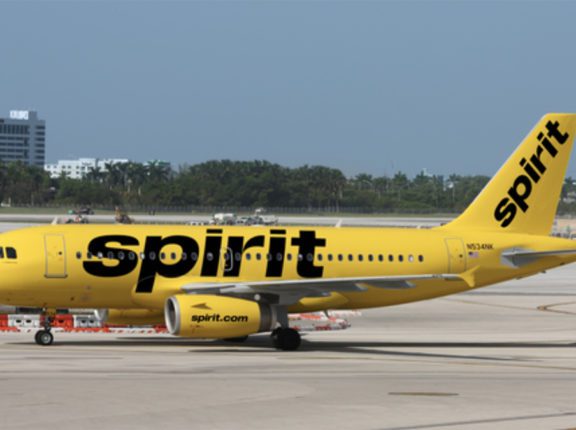
More recently, the collapse of Spirit Airlines illustrates the global dimension of these challenges. Based in Miami, Spirit had become a major player in the ultra-low-cost model, operating an extensive network across the United States, the Caribbean, and Latin America. Despite several restructurings, the airline could not withstand the deterioration of its economic environment.
Rising fuel prices played a triggering role, but the underlying problems were deeper: shrinking margins, intense competition, and a business model under constant pressure.
Beyond the airline’s collapse, the Puerto Rico case highlights a central paradox of air transport. While route capacity can often be absorbed by competing airlines, the disappearance of an ultra-low-cost carrier profoundly changes the pricing balance of the market.
In other words, connectivity may remain, but affordability deteriorates.
In highly price-sensitive markets such as routes linking Puerto Rico to the U.S. mainland, Spirit helped contain fare levels on high-traffic routes used by tourists, residents, students, and business travelers alike.
Its disappearance therefore represents not only a reorganization of supply, but also a structural increase in fares that could affect medium-term demand.
In the Caribbean, History Repeats Itself: The LIAT Case
The case of LIAT remains particularly emblematic.
Founded in 1974, the historic inter-Caribbean carrier was majority-owned by regional governments, particularly Antigua and Barbuda and Barbados. This public governance reflected a strong political commitment to maintaining regional connectivity despite limited profitability.
Over the years, the airline accumulated persistent deficits. Already weakened before the pandemic, LIAT underwent a major restructuring in 2020 without managing to restore long-term financial balance.
In 2024, LIAT ultimately ceased operations after operating at a loss with a drastically reduced fleet, reportedly down to a single aircraft in its final months.
Since then, a new entity — LIAT Air — has attempted to relaunch operations on more cautious foundations, without assuming the airline’s previous debt burden.
Recovery Attempts in a Fragmented Market
Today, the Caribbean aviation landscape is being reshaped around smaller operators and more cautious strategies.
Airlines such as LIAT Air, Sky High, and Sunrise Airways are attempting to fill the gaps left by successive bankruptcies by adopting more flexible models: gradual expansion, limited capacity growth, and diversified partnerships.
This restructuring reflects the market’s adaptation, but it also results in a fragmented supply that raises questions about long-term sustainability and network coherence.
Rethinking the Model in a Context of Lasting Crisis
The collapse of Air Antilles comes at a particularly tense moment for the airline industry.
Jet fuel costs — which can account for 30 to 40 percent of operating expenses — continue to weigh heavily on financial balances. This volatility is forcing some airlines to reduce frequencies or suspend routes for upcoming seasons.
In this environment, some French carriers such as Air Caraïbes, Air France, and Saint-Barth Commuter appear more resilient. Their strength lies in more integrated business models combining long-haul operations with regional services, while adapting capacity according to seasonality.
The long-term viability of regional aviation therefore seems increasingly dependent on integration with long-haul networks, enabling airlines to pool costs and optimize passenger flows. Conversely, a model based exclusively on inter-island routes appears structurally fragile.
In this context, support mechanisms could still play a role, provided they target the main cost drivers. This could include targeted support for skilled aviation jobs, as well as stronger territorial continuity mechanisms through public service obligations or tax and social charge relief.
Beyond the succession of airline failures, the future of Caribbean aviation ultimately raises a major strategic issue: the connectivity of island territories.
In a fragmented region heavily dependent on air transport, ensuring sustainable connectivity requires a profound rethinking of economic models, taking into account both the structural constraints of the market and the ongoing transformation of the aviation sector.
Because ultimately, the disappearance of Air Antilles is not an anomaly.
It is the symptom of a model that still remains to be reinvented.
Caroline Romney is a Tourism & Transport consultant based in the French Caribbean.