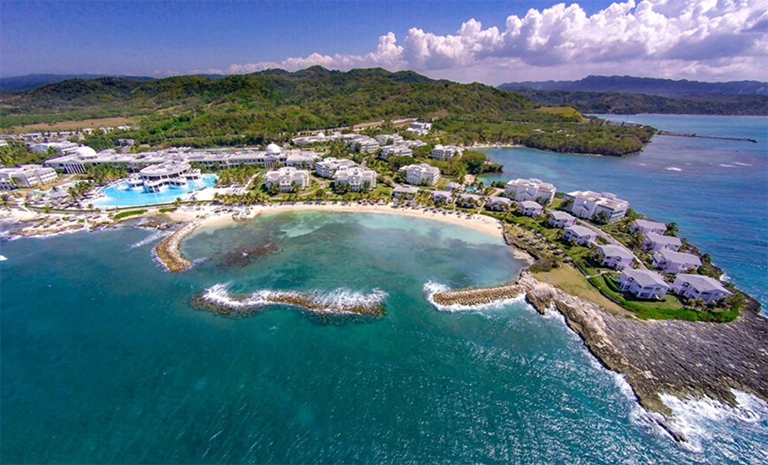
Tourism and the Caribbean Economy
By Michael W Edghill
CJ Contributor
A TRENDING topic amongst foreign policy wonks as of late is that of the “resource curse.”
The theory, which has it that nations which are “blessed” with an abundance of natural resources (oil is the paramount example) end up plagued by poor governance, rampant corruption, etc., was first popularized in the 1990s and early 2000s.
It has reappeared as a point of debate in light of the potential sub-Saharan Africa oil boom, even garnering a lengthy discussion in a recent Foreign Affairs article.
While there is no absolute definition of the resource curse, common themes do exist, such as ineffective governance, lack of economic diversification, underdevelopment, revenue volatility, and excessive borrowing. Noting the commonality of problems that exist, the question then must be considered: Is tourism a natural resource and, if so, are the island-states of the Caribbean subject to the resource curse?
That is, are the beaches, mountains, sunshine, etc. of the Caribbean resources that occur naturally and are harnessed at relatively small expense to be offered in the marketplace for profit? Conceding that point offers the opportunity to examine tourism as a natural resource.
A statistical comparison between oil-dependent states and tourism-dependent states bears out that the common root to the resource curse problem is an over-reliance on the one resource. An examination of the World Bank’s database on a nation’s oil rents versus its GDP for 2011 shows that many of the nations that are identified as suffering from the resource curse have an extreme over-reliance on the oil trade.
Angola (46.3 percent of GDP), Kazakhstan (27.5 percent of GDP), and Nigeria (32.9 percent of GDP) are just a few examples.
Likewise, an examination of statistics from the World Travel & Tourism Council reveals that many Caribbean states rely on tourism in much the same way. Using the WTTC formula for total economic impact of tourism (direct impact of travel and tourism plus indirect economic impact of investment) for the year 2012, the over-reliance is staggering. Jamaica (27.4 percent of GDP), St Lucia (39 percent of GDP), Barbados (39.4 percent of GDP), The Bahamas (48.4 percentof GDP), and Antigua & Barbuda (77.4 percent of GDP) provide a good sample of the regional trend.
Why would one consider the tourism industry, which provides so many direct and indirect jobs, a curse for the region?
In the same way that oil itself is not a curse, the beaches and natural attractions that bring so many people to the Caribbean are not inherently detrimental.
However, because it provides the best possibility for return on investment, the tourism industry is often developed so intently that it leads to a lack of development by the state for other sectors of the economy. This lack of economic diversification leaves the state extremely vulnerable to revenue volatility, as has been shown by the global economic slowdown. If people stop purchasing that one good, the consequences are significant. Further parallels between the problems for these petro-states who suffer from the resource curse and Caribbean tourist-states exist but will not be elaborated upon here.
The good news for both petro-states and Caribbean tourist-states is that demand is expected to continue to rise for both in the coming years.
To take advantage of the opportunity that will be present from increasing tourism revenue, Caribbean governments need to plan well in advance. The plan must include directing a significant portion of revenues generated towards sustainable social development.
Development programmes that will focus on creating jobs within industries that have more consistent demand rather than an industry where demand can literally leave the next day.
This type of development will take creativity, vision, and consistent effort. The type of creativity and effort that goes beyond what can be elaborated upon in this limited space.
But developing long-term, sustainable industries and smart social improvement programmes are necessary to avoid the terrible cycle of economic volatility and social unrest that states who suffer from the resource curse experience.
Michael W Edghill, a Caribbean Journal contributor, teaches courses in US Government & in Latin America & the Caribbean. His work has also appeared in the Yale Journal of International Affairs and Americas Quarterly.