Op-Ed: Trade Unions in Modern Jamaica
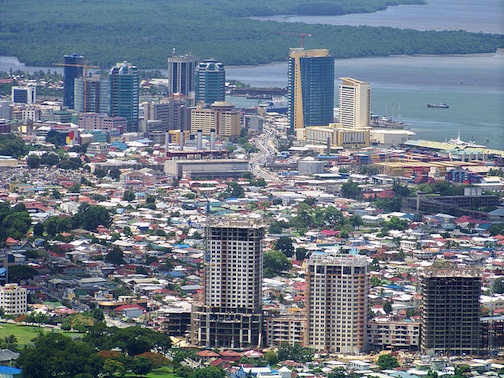
Above: Kingston
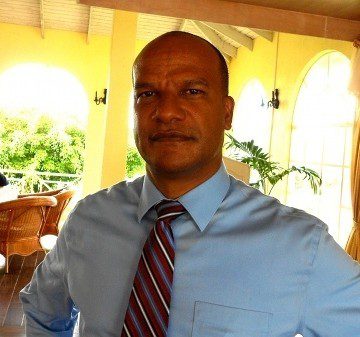
By Kent Gammon
Op-Ed Contributor
The trade union movement’s early days in Jamaica
The trade unions of Jamaica came into prominence in the workers’ riots of 1938. At that time the workers were protesting the level of their wages and took to rioting in the streets.
Sir Alexander Bustamante was imprisoned defending the workers’ rights at that time and he subsequently formed the Bustamante Industrial Trade Union and then the Jamaica Labour Party in 1943, a laissez-faire political party.
His cousin Norman Manley, QC, a prominent Attorney-at-law, was also active in advocating workers’ rights and defended Sir Alexander Bustamante obtaining his release after Bustamante served several months in prison due to his “actions against the state.” Norman Manley formed the People’s National Party in 1938 as a socialist political party.
In 1962, trade unions were recognized in the Jamaican constitution and this was also the year of Jamaica’s independence from Great Britain.
The trade union movement has therefore played a very significant and central role in Jamaican politics over the decades. As a corollary the trade unions have determined to a large extent over the electoral cycles the governing party and thus the ruling administration because of its large membership base and direct linkage to the two main political parties in Jamaica.
Social progress is the greater good … really?
The preponderant political effect of the trade union movement on Jamaican politics has resulted in a pandering to their interests. Trade unions exist to secure the collective bargaining rights of their members. The workers pay trade union dues to union delegates to ensure the trade unions have monetary resources to secure their aforementioned rights.
The trade unions in Jamaica have been predominantly concerned with more pay for their workers, with very little if any regard to whether their employers have the monetary resources to pay same nor on the productivity quotient of the Jamaican worker.
The civil service being the administrative arms of the executive, legislative and judiciary has to remain non-politicized in order to carry out their duties effectively and impartially. Were this not the premise on which the civil service operated it would place political parties’ interests over that of the state.
The Accreditation Comittee of the 1970’s turned the non-partisan and efficient functioning of the civil service on its head, leading the Jamaican civil service to become highly politicized, the formula for civil service corruption and inefficiency, and in fact has worsened as the PNP set about bloating the civil service with supporters of their party to create the illusion that the state was a greater job creator with all the deleterious effects that follow on the state’s wage bill.
Can we get the economic train back on track?
When the civil servants and the trade unions demanded with such ferocity a 7 percent wage increase in Summer 2011 of the Jamaica Labour Party administration, promised by the PNP administration prior to the 2007 general election, the Jamaica Labour Party administration gave in to them.
Despite the aforesaid administration pleading with the civil servants and trade unions that a wage increase across the public sector was not feasible at that time, given the worldwide economic recession, they resisted the pleas stating the wage increase was promised to them.
In retrospect the Jamaica Labour Party administration should not have given in to those wage demands as it jeopardized the IMF agreement the country obtained in 2009 that had as a conditionality that the public sector wage bill of GDP should not exceed 9 percent and this could not be achieved with the public sector wage increase in 2011.
In the first quarter of 2012 the civil servants and trade unions in a shocking volte-face signed a wage freeze with the current administration. But this may be too little too late to save a new negotiated IMF loan.
Its the economy stupid … always has been and always will be
The wage bill of civil servants to the country’s growth domestic product remains at above 10 percent. The IMF mission, in its recent visit to the island, did not negotiate a deal with the government despite the PNP promising in the December 2011 general election that an IMF deal would be negotiated within 2 weeks of them coming to office.
The IMF has repeatedly stated that the government must address three fundamentals: returning Jamaica to a growth track, cutting the wage bill to GDP to at least 9 percent and public sector reform.
The sooner the Jamaican people realize that it is the growth of an economy that is ultimately important and that social progress is dependent on economic progress, not the other way around, the sooner the Jamaican masses will have a better standard of living.
The civil servants and trade unions should not hold the entire county to ransom because of their narrow agendas.
It is high time the civil servants and trade unions get back to fundamentals of economics that is their own interest are furthered when the economy operates on the demands of the market and not the demands of the civil servants and trade unions.
Kent Gammon is a former candidate for the Jamaica Labour Party, the former Chairman of Jamaica Anti-Doping Disciplinary Committee (2008 -2011) and an Attorney-at-law.
Note: the opinions expressed in Caribbean Journal Op-Eds are those of the author and do not necessarily reflect the views of the Caribbean Journal.