Op-Ed: What Would Norman Manley Think of Present-Day Jamaica?
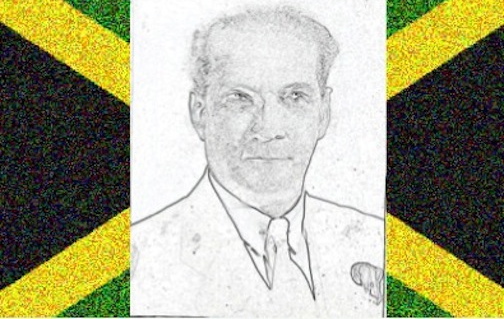
By David Rowe
Op-Ed Contributor
Many Jamaicans contemplate the historical lives of the architects of our independence as our 50th anniversary approaches. Is Norman Manley the George Washington of Jamaica?
Norman Manley is regarded by many as the Father of Jamaica because of his contribution to the development of Jamaica’s decolonization and nationhood.
Manley, born in 1893, was son of Thomas Manley and Margaret Shearer, from a family based in Manchester. The Manleys had two sons, Roy and Norman.
Significantly, both Norman Manley and his brother Roy fought in World War I. Roy did not survive. Norman did, but he returned to Jamaica as someone who had given his brother to the colonial cause and may have felt an unwillingness to accept colonial inferiority after the war.
Among Manley’s many great achievements was the formation of the People’s National Party, the largest Caribbean political party and the party that is currently in government in Jamaica. Norman Manley formed this party to capture “the support and confidence of labour” in 1938 after the sugar riots in Jamaica had led to nationwide labour instability and a general strike.
A split later emerged between Manley’s People’s National Party and Alexander Bustamante’s Bustamante Industrial Trade Union after an initial period of co-operation and consolidation which included Manley’s role as a lawyer for Bustamante and St. William Grant, Bustamante’s collaborator during the strike.
Although they both played a role as labour agitators, Bustamante was arrested by the British but Manley was not. Some commentators think that the consequences of this led to a split in the working class movement which remains unhealed today.
Would Norman Manley recognize his party today on the 50th anniversary of the country’s independence? He would, in my opinion, be concerned about the party’s commitment towards mainly private sector solutions to Jamaica’s economic woes.
In 1940, Manley committed the PNP to socialism and the concept that the ‘’means of production should, in one form or another, come to be publicly owned and publicly controlled. Manley would not have agreed to the rampant capitalism which now obtains in Jamaica. He was particularly in favour of public ownership of utilities and urban bus transportation.
Manley would certainly be in favour of the party’s pro-Rule of Law stance and pro-US position. As a Barrister, he would definitely be supportive of the recent extraditions of Christopher Coke and Busy Signal. Whether he would agree with a separate Ministry of National Security, not connected to the Ministry of Justice, is another matter.
Norman Manley discussed regionalism with President Kennedy and, of course, supported The West Indies Federation. Manley would have been supportive of
CARICOM and its CSME, which he clearly foresaw.
Would he have ideologically embraced the admission of Haiti to full CARICOM membership? This is a much more complicated issue as Haiti and Jamaica are not culturally similar. The socially conservative Manley may have passed on this relationship, although his political disciple, PJ Patterson gave Aristide political asylum in Jamaica.
Norman Manley went to the 1943 Constitutional convention in England. He later was forced to convince Jamaicans of all political leanings of the viability of self-government for the country.
Jamaica’s 1962 Constitution is essentially his work, with the influence of Former Prime Minister Edward Seaga and David Coore, QC.
Would he have agreed conceptually with the Caribbean Court of Justice replacing the Judicial Committee of the Privy Council? Some think that Manley’s barristerial detachment and Anglophone demeanour would have led him to be suspicious of an all-Caribbean court. He is famous for his victories at the Privy Council in the Vicks case.
Perhaps this is so, but Manley the regionalist might have had a positive attitude on the Caribbean Court’s auspices.
Norman Manley would certainly not understand the Jamaican murder rate, the lotto scam and Jamaica’s generally out-of-control crime situation. This feature of Jamaica, more than anything else, would have astonished the venerable NW Manley were he to appear ethereally on Jamaica’s 50th independence.
David P Rowe is an attorney in Jamaica and Florida and a law professor at the University of Miami School of Law in Coral Gables, Fla.
Note: the opinions expressed in Caribbean Journal Op-Eds are those of the author and do not necessarily reflect the views of the Caribbean Journal.