
Op-Ed: Jamaica, Greece and Putting the People Before the Creditors
By Jake Johnston
Op-Ed Contributor
Jamaica is barely emerging from its worst economic downturn in the last 30 years. Even after positive growth returned in 2011, the economy remains 3 percent below its 2007 level, and with anaemic growth projected for the foreseeable future, the economy won’t reach its pre-recession level until sometime in 2015.
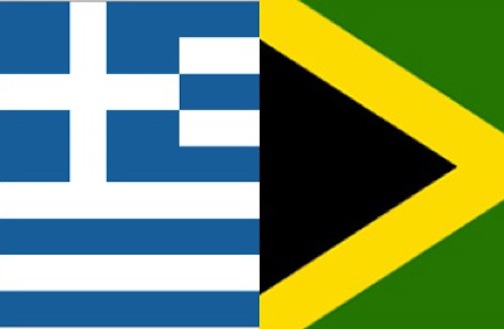
The main impediment to getting the Jamaican economy back on solid footing has been its tremendous debt burden—which, according to the available data, is the largest in the world. Interest payments alone equaled nearly 10 percent of GDP last year, more than even crisis-ravaged Greece.
The problem has been compounded by excessively austere macroeconomic policies supported by the International Monetary Fund (IMF), Inter-American Development Bank and World Bank intended to maximize the government’s budget surplus and prioritize the service of debt. As my colleague Juan Antonio Montecino and I argue in a research paper on the Jamaican economy, this amounts to a consistent transfer of income from taxpayers to domestic and foreign creditors, and a serious impediment to the formulation and implementation of a development agenda.
Unfortunately, the budget estimates announced last week by the Jamaican government are simply more of the same. An astonishing 54 percent of the total spending goes to debt servicing payments, according to the Jamaica Gleaner, an even greater percentage than in previous years.
With greater resources going to debt servicing, even less is left for social spending and needed infrastructure projects. So while Jamaica and its international financial backers ensure that creditors continue receiving checks, the people of Jamaica will find it even harder to send their children to school or to the doctor.
With a deep recession and decreased funds for important social sectors, it’s no wonder that poverty has doubled in the last few years; from 9.6 percent in 2007 to nearly 20 percent in 2010. Unemployment continues to rise as well, from below 10 percent in 2007 to over 14 percent as of this past January.
It is high time that Jamaica started prioritizing its people over its creditors. Ian Boyne and Dennis Chung, two veteran analysts of the Jamaican economy, have dubbed this year’s budget, “the creditors’ budget.” Boyne explains:
This Budget has been crafted to gain the approval of the International Monetary Fund (IMF) and the other multilaterals on which we depend for our economic lifeblood. This budget is what the neoliberals would call ‘a credible budget’, meaning one that is tight, lean and meets the criteria of the Washington Consensus. It should make it easier for us to raise money on the international capital markets.
But, as Boyne points out, what Jamaica needs is a people’s budget, one that puts the development of the country and its greatest resource (its people) at the top of the list. The failed austerity policies which began under the previous government and have been continued by the People’s National Party and its new Prime Minister, Portia Simpson-Miller, have been tried before. They failed. High debt, low growth and more austerity leads to a vicious cycle of ever-lower growth and ever-higher debt. Greece is but the latest example. The argument was well summed up by Dennis Chung in a blog post last month:
The fact is that because we have impractically convinced ourselves that we could not afford new debt we ended up causing the economy to contract. And this inability to face reality has not helped us because we have ended up having to go to the capital markets anyway for new debt. So what was the purpose of the argument against expanding the debt? What we have to understand is that when we contract fiscal expenditure, causing a contraction in the economy, all we end up doing is increasing the debt/GDP ratio anyway, as GDP is not growing and the debt grows by virtue of interest costs.
When Simpson-Miller took office in January, she said “in a time of crisis, government must act to stimulate growth.” Yet with this year’s budget, we see just the opposite.
If Jamaica is to emerge from its crippling debt trap, it must start by finally prioritizing the Jamaican people over its creditors.
Jake Johnston is an international researcher at the Center for Economic and Policy Research. He writes on Haiti-related issues for the blog Relief and Reconstruction Watch.
Note: the opinions expressed in Caribbean Journal Op-Eds are those of the author and do not necessarily reflect the views of the Caribbean Journal.