
Op-Ed: Royann Dean on Building a Creative Economy in the Caribbean
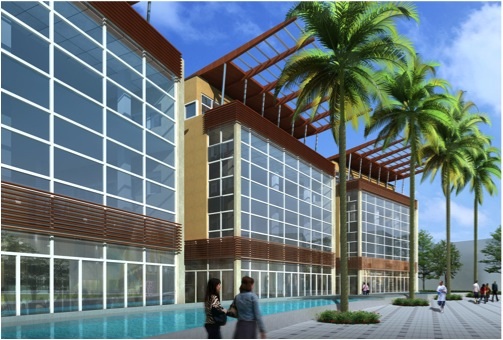
Above: the Cayman Enterprise City project
By Royann Dean
Throughout election season in the region, we will inevitably hear talk about sustainable development. Sustainable is commonly synonymous with ‘environmental’ but also includes economic sustainability. Creativity is not likely to be a part of that discussion. But do we really understand creativity and its relevance to economic sustainability?
Creativity can be considered in three contexts, according to the United Nations Centre for Trade and Development (UNCTAD).
The most commonly accepted is artistic creativity, which “involves imagination…originating ideas…and novel ways of interpreting the world.”
Next, there is scientific creativity, which is thought of as “curiosity, the willingness to experiment and make new connections in problem solving.”
Finally, there is economic creativity, which leads to “innovation in technology, business practices and marketing…and competitive advantages.”
Over the last decade or so, the interrelated nature of creativity and the creative process has come to be valued globally as a viable means of economic development. Creative economies have grown faster than national economies in several countries, giving rise to terms such as ‘creative economy’ and ‘creative industries’.
The creative economy is an evolving concept, one based on the notion of creative assets generating economic growth and development. And it’s not limited to the arts. Creative economy models include industries such as architecture, advertising, software and gaming.
As a region comprised of many small island states, the Caribbean is vulnerable to external economic factors due to a relatively low natural resource base and relative geographic isolation.
At a 2010 meeting of the Economic Commission for Latin America and the Caribbean (ECLAC), the body noted that some economies in the region have been somewhat sluggish due, in part, to a lack of competitiveness and encouragement of innovation and productivity.
There is a consensus that a long-term development strategy for sustainable growth is necessary for the region as a whole. ECLAC, UNCTAD, CARICOM and the Commonwealth Development Bank all acknowledge and support the development of creative economies as a part of such a strategy.
Moreover, research from CARICOM shows that the creative industries have emerged as a key growth sector in the Caribbean economy through their contribution to GDP, exports and employment as well as through an impact on destination and intellectual property branding.
Creative economies are particularly important for tourism-based economies. Dr Keith Nurse, director of the University of the West Indies’ Sridath Ramphal Centre for International Trade Law, Policy and Services, says that by introducing cultural and creative industries to tourism, these nations can reinforce a sense of self-identity and local added value to the tourism industry, thereby diversifying the product.
Some countries, such as Barbados, Jamaica, Trinidad and Tobago and the Dominican Republic, have made investments in developing creative industries. These countries have done more than make an investment in their economic development. They’ve also invested in the human development and social inclusion that can result from creative economies and nurturing a creative class.
According to economist Richard Florida, people who value meritocracy, innovation and diversity form a creative class which includes, among others, teachers, business people, lawyers and scientists. They live and thrive in cities which reflect those values and are always looking for new ways to do things and improve their surroundings. In short, they make creative cities because they question the status quo and are looking for new or better ways to do things. These cities then exude character and a sense of place, which reinforces creativity.
Creativity becomes a part of the culture and innovation increases, subsequently leading to direct and indirect forms of economic development. These are the cities in which people want to live, work and visit. These are the cities that are successful.
Creative industries will always be around in some form but unless there is a combination of public and private sector support, these industries cannot fully exploit their economic possibilities. If the Caribbean is to become more globally competitive, increase tourism, improve regional trade and maximise the investments made in its infrastructure and industries, creativity needs to be a part of the culture of its member countries.
If it wants to attract and retain people who can grow an equitable and sustainable economy, the Caribbean needs to encourage and use creativity and innovation. Otherwise, this region will continue to lose members of its creative class to countries in other parts of the world.
Royann Dean is a branding specialist and the principal of tmg*, a strategy and design firm in Nassau, the Bahamas. She can be contacted at royann@tmginnovates.com.
Note: the opinions expressed in Caribbean Journal op-eds are those of the author and do not necessarily reflect the views of the Caribbean Journal.


