250 Years Ago, This Caribbean Island Was the First to Recognize the United States — And Now It’s Celebrating the Anniversary
The 95-stateroom Victory I will add accommodations for up to 190 guests during Statia Week in Nov. 2026.
On Nov. 16, 1776, the American brig Andrew Doria entered the harbor and fired a salute. Fort Oranje returned it under the authority of Dutch governor Johannes de Graaff, an exchange widely regarded as the first formal acknowledgement by a foreign authority of the flag and sovereignty of the newly independent United States.
Statia is turning a cruise ship into a floating hotel for the anniversary of this event.
With accommodations filling quickly ahead of the First Salute 250 commemorations, the Statia Government has secured the 95-stateroom Victory I to house up to 190 additional guests during Statia Week.
The ship will operate as a hotel from Nov. 10 through Nov. 17, covering the full commemorative program and Statia Day on Nov. 16. Seven-night packages start at $2,750 per room for as many as two guests, excluding tourist tax, reservation charges and payment-processing fees.
The arrangement gives members of the Statian diaspora, international travelers and other visitors another way to stay on the island during a period of exceptional demand. It will supplement Statia’s existing hotels, villas and guesthouses while keeping visitors close to the week’s events, restaurants and historical attractions.
The First Salute
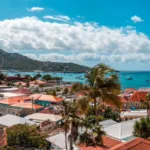
Guests aboard Victory I will have easy access to Oranjestad and Fort Oranje, the site at the center of the anniversary.
The salute was not an isolated moment. During the 18th century, Statia was one of the busiest trading ports in the Caribbean, earning the nickname the Golden Rock. Its free-port status drew ships and merchants from across Europe, Africa and the Americas, with hundreds of ships sometimes gathering in its harbor.
The island supplied the American colonies during the Revolutionary War, including weapons, ammunition and other goods. That role eventually led Britain to capture Statia in 1781, when Admiral George Rodney seized the island and targeted its immense commercial wealth.
The prosperity was also inseparable from slavery and the trafficking of enslaved Africans. The ruins scattered across Lower Town, including old warehouses and sections now submerged beneath the sea, preserve evidence of both the extraordinary scale and the human cost of Statia’s trading era.
Alexander Hamilton’s Statia Connection
Statia also occupies a fascinating place in the early life of Alexander Hamilton. While Hamilton was born on Nevis and later lived on St. Croix, historical research has found that he spent part of his childhood on Statia.
As we previously reported in our story on Alexander Hamilton’s forgotten Caribbean island, local records list Hamilton’s father, James Hamilton, his mother, Rachel Faucette, and their two sons on Statia during multiple years in the 1760s.
The discovery adds another layer to the island’s connection with the founding of the United States. Hamilton experienced Statia when it was a wealthy, multilingual commercial center populated by Dutch, English, French and Jewish communities.
The island’s Honen Dalim Synagogue, completed in 1739, remains one of the oldest surviving synagogue structures in the Western Hemisphere. Its ruins are another reminder of the cosmopolitan island Hamilton would have known.
That combination of American revolutionary history, Caribbean commerce, Jewish heritage and colonial architecture is part of why we have called Statia one of the Caribbean’s best-kept secrets.
A Week Aboard Victory I
“First Salute 250 belongs to Statia and its people, and we want as many people as possible who feel connected to this island and its history to have the opportunity to be here,” Island Commissioner Rechelline Leerdam said. “The arrival of Victory I gives us additional capacity during an extraordinary week for Statia and allows more visitors to experience this historic moment where it happened.”
Victory I will remain primarily at Statia during the commemorative period. The ship is scheduled to make a day trip to St. Maarten on Nov. 11 to collect additional guests before returning that evening.
The floating hotel gives Statia an immediate answer to a challenge frequently faced by smaller Caribbean islands hosting major events: how to accommodate a sudden influx of visitors without shifting the experience away from the destination itself.
For Statia, that means more travelers will be able to attend the anniversary where the First Salute occurred, explore Fort Oranje and historic Oranjestad, and spend time at places like the Old Gin House and the Barrel House.
Visitors can also explore the Quill, the island’s dormant volcano, and the Golden Rock Dive and Nature Resort, Statia’s first luxury resort.