By Sherry Constantine
CJ Contributor
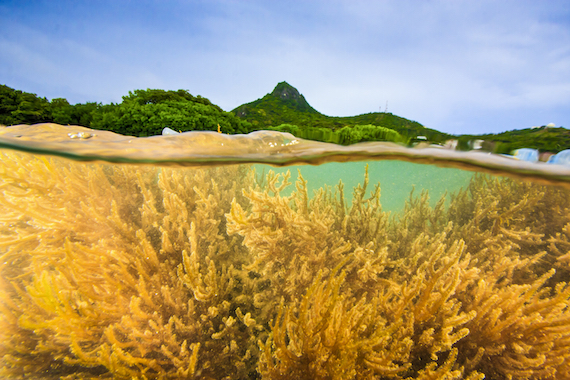
This May, after a full day of interviews with local entrepreneurs, I relaxed with a spiced sea moss smoothie at a café located in the Pointe Sable Environmental Protection Area, Saint Lucia.
We’ve been drinking sea moss in the Caribbean for decades, but the rest of the world is finally catching on.
Rich in vitamins, minerals and amino acids, what we’ve known as a healthy drink or aphrodisiac is now considered an international “super food,” which means there is high demand for Caribbean expertise and recipes.
Sea moss production is one of many innovative additional sources of income for coastal communities in places like Saint Lucia.
Through the Climate-Resilient Eastern Caribbean Marine Managed Area Network (ECMMAN) project, with support from the German Ministry for the Environment, Nature Conservation, Building and Nuclear Safety; The Nature Conservancy, The Saint Lucia National Trust, OECS Commission, and SPAW-RAC/CaMPAM are helping to improve management practices for Pointe Sable and providing small grant opportunities for sustainable livelihood enterprises.
Developing a marine managed area means managing human activity and resource extraction with the collective goal of protecting nature without negatively impacting those who depend on it. This can sometimes affect fishers’ ability to fish, but managing activities in these protected areas helps maintain healthy fish populations for the future of the fishing industry. And there are many alternative ways to make a living along the coasts.
Sea moss farming, charcoal production and horseback riding are just a few of many local businesses blossoming in Pointe Sable. The Nature Conservancy and partners provide grants to community-based ecotourism groups that care for and promote the protected area.
For instance, Eco-South Tours will use their grant to expand their business by developing a marketing strategy, upgrading horse stables and training craft makers. Tourists can purchase unique handmade gifts and take excursions throughout the area, including a horseback tour through the Mankote Mangrove.
At 63 hectares, Mankote is Saint Lucia’s largest mangrove forest. Since 1997, the Aupicon Charcoal Producers Association has effectively managed the forest. Aupicon’s members sustainably cut mangrove trees and turn the wood into charcoal, and the entire process is accessible to tourists. Nicholas Samuel, President of Aupicon, explained the grant money would allow their idea for a nature-based tourism center to become a reality.
“We have the skills to do it, but the finance, that’s what we don’t have,” he said.
Innovative new businesses are popping up throughout the Eastern Caribbean. Participating ECMMAN countries include Antigua and Barbuda, Dominica, Grenada, Saint Kitts and Nevis, Saint Lucia and Saint Vincent and the Grenadines. Within each country’s marine managed areas, we expect to see many sustainable job opportunities and a huge impact on the health of marine and coastal habitats.
Dr Sherry Constantine is the Program Manager for The Nature Conservancy’s Eastern Caribbean Program. She is a Saint Lucia native and currently works out of The Conservancy’s Grenada office.