Interview with Damien Cave, the New York Times’ Caribbean Correspondent
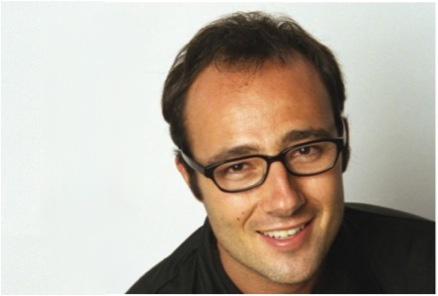
Damien Cave covers Mexico, Central America and the Caribbean for the New York Times based out of Mexico City. Cave has told the stories of some of the world’s most challenging events, from the war in Iraq to the earthquake in Haiti. He was part of a team of New York Times reporters who were finalists for the 2008 Pulitzer Prize in international reporting. He also served as the Miami bureau chief for the paper from 2008 to 2010. Caribbean Journal talked to Cave about the challenges of covering the Caribbean region, the global reach of Mexican drug cartels and his experiences in Haiti after the earthquake.
You cover Mexico, Central America and the Caribbean. How difficult is it to isolate the important stories in such a large geographical area?
It’s definitely a challenge, as is clear to anyone who knows the region. Mexico, Central America and the Caribbean are three very different places with very different stories. At times it can be difficult as to how to assign resources, which stories to do. But that’s the case for anyone in any of these areas—just like it is, for example, in West Africa or East Africa, there are very similar challenges.
What was the biggest challenge in covering the Haiti earthquake?
In Haiti, for the earthquake, the biggest challenge was just logistics. When we got here, it was finding gas to get the trucks to go. I was embedded with a rescue unit from Miami-Dade (Florida), and they were having a really hard time getting out the door. I was having a really hard time with getting gas for the generators to make sure everything was powered up. That was the first challenge. After that, the bigger challenge was the scope of the death. I covered the war in Iraq, and thought I was familiar with death. But the sheer numbers, how many people had died, how visible it was – the scene of death everywhere was really overwhelming. It was a surprise for a lot of us who had been in dangerous situations. The scope and scale was just overwhelming – there were literally piles of bodies in a lot of places. It was something that none of us was used to seeing, and something no one should have to see, really. In that sense, it was really difficult.
How would you categorize the reaction to Aristide’s return?
It’s complicated. To use the general cliché – I think some people find him very exciting and thrilling, and the argument for those who respect him is that he would be a counterbalance, and a kind of watchdog for the new president. That’s the positive side – that he might hold them to account. The potential negatives that are expressed often, and by the international community, is that he is also a lightning rod, in the sense that he can bring volatility to a place very quickly that is in desperate need of just moving forward. The question is whether or not he’ll push Haiti backwards and lead to more volatility and instability, at a time where it needs to be moving forward toward reconstruction, or whether he can play a positive role.
What are some of the major trends you’ve been seeing in the region?
One thing is – we’re based in Mexico City – the way that the drug cartels are moving into all the different countries in different ways and taking advantage of different vulnerabilities. It’s something that we’ll perpetually keep an eye on. Jamaica is part of that. Haiti is a hot spot. The Dominican Republic is something of a bright spot – it has done a good job of pushing the cartels to other places. That is something we’ll keep an eye out for. The economies of the Caribbean countries are very dependent on tourism, but are also changing and becoming more dynamic. Cuba is an ongoing question and a big story that I’m sure we’ll pay close attention to the extent we can – one of the challenges there is getting visas. Those are the main things – but we’re kind of keeping an eye out for anything. We’re looking for good stories in the region, and we don’t have any specific things we won’t cover or will cover. I think one of the challenges for the Caribbean is that our readers think of it a little bit as a vacation spot, so trying to create an interest in and make them connect with these countries in a way that’s different – I think that is a challenge.
It seems that Haiti receives a very large amount of coverage in the U.S. media compared to other Caribbean nations. Why do you think that is?
I think, historically, Haiti is a very special country – it was the first country to be led by blacks, to have a revolution that threw off colonialism in that area, with the the former slaves that did this. Then it was followed up by a number of activities – others would say meddling by the United States. I think that those two things make it a very unique place in the region. I think that, going forward, Americans have had a close relationship with Haiti because there are so many Haitian-Americans in the United States. Haiti has been the biggest challenge in the region for so long, that it’s this ongoing question of, “can we get it right?” And if you can get Haiti right, you can probably get almost anywhere right. The challenges are so great. I think that’s particularly what drives the interest. It’s a very complicated place, with people who have both struggled a lot, but also have a resilience that I think is inspiring. There is a culture there that resonates with a lot of people – not just longtime suffering but also one full of beauty and resilience. I was working in Haiti with Maggie Steber, a photographer who has been working in Haiti for 20 years. We had just come back from a story about the mass graves, from this horrible place filled with bodies. We came over this hillside, and there was a cow, and a beautiful white bird, and you could see the open Caribbean sea. And she said, “This is how it is – you think it’s hard and then you see things like this and realize why people keep coming back.”