
A Caribbean Journal Editorial
For decades, Caribbean citizens have been making their way off their own islands in search of prosperity abroad — whether that be in the United States, Europe or South America. These men and women typically send back a large portion of the prosperity they derive back to their families in the Caribbean.
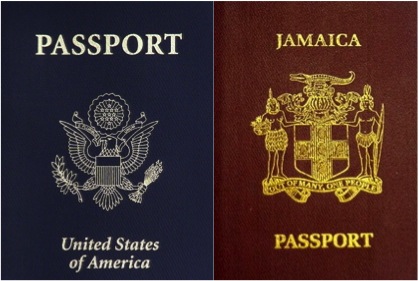
It is no surprise, then, that many Caribbean nationals have two passports — one from the island of their birth, and another from the country in which they work. This is true for many of their children. The two-passport problem is nothing new — and while the optimistic mind sees a future Caribbean from which no one needs or wants to leave, the benefits of such transmigration in the present should not be undervalued. Indeed, many families support themselves with remittances.
“Two-passport” Caribbean nationals tend to keep their home countries in their hearts, but it is no surprise that they soon develop strong affections for their new countries of residency. But for most who wield dual passports, there is not a concern of mixed allegiance — when one is employed within a given country, their passport does not generally determine the amount of effort they put into their jobs. But there is one job for which this is always an issue — working in the business of government.
There is a reason that section 40(2) of the Jamaican constitution (and, for that matter, sections in most Caribbean constitutions) makes restrictions on the eligibility of citizens to sit in Parliament. For those who are employed by their own governments, any kind of dual citizenship is simply bad business. An employer cannot have an employee having any other company in mind when he or she does his work. For those in the business of serving their countries, loyalty is absolute. When one devotes his or herself to serving the people, only one people can be in the heart. Naturally, that the Jamaican constitution demands it.
According to Section 40(2)(a), which has been in the news domestically in Jamaica for some time, no one is eligible to sit in Parliament if they are, by virtue of their own act, “under any acknowledgment of allegiance, obedience or adherence to a foreign Power or State.”
In the landmark Dabdoub v. Vaz case from 2007, this meant that the act of renewing a foreign passport, even one earned only by birth, meant ineligibility for Parliament. Vaz’s victory in the West Portland seat over Abraham Dabdoub was accordingly invalidated by the Jamaican Supreme Court.
Now, it is news that five parliamentarians in Jamaica have had the two-passport problem, with some resigning, some renouncing their seats, and some renouncing their passports and re-entering politics. Two more such cases are currently in dispute.
The news that Jamaican Prime Minister Bruce Golding knew of the problems and chose not to address them is troubling; but the only lesson that should emerge is that in future, such candidates should never be on the ballot in the first place. The Electoral Office should ensure that no candidate with a second passport is allowed on the ballot – such an initiative (which would not seem to be altogether difficult) would spare the citizens – and Parliament — a great deal of headache.
It is not unrealistic to think of a CARICOM that does not see workers traveling abroad for greener pastures. But while the two-passport problem will be here for a while, it is incumbent upon those running for office — and those who purport to ensure the integrity of elections — to read the constitution first.


